THE COGNITIVE VEHICLES ECOSYSTEM

From a commander's order to an outcome.

One set of products tasks, plans, configures, validates, flies and reports for every vehicle, in every domain. The vehicles change; the ecosystem stays the same.

01TaskMAESTRO turns a commander's order into assignments
→
02PlanCOMPOSR plans each mission on real geography
→
03ConfigureCOMPILR builds the vehicle definition from a parts catalog
→
04ValidateThe real autonomy flies the mission in simulation first
→
05AdaptGIZMO decides on board what is worth a closer look
→
06ReportEvery sortie fused into one product for the command

MAESTRO · COMMAND

Ask for an outcome. The fleet works out who.

MAESTRO turns a commander's tasking order into assignments across the fleet. It decides which vehicles take which objectives, splits the work, and records what no vehicle can do yet. Each unit offers what it can do and when; nothing launches without approval.

MAESTRO asks platforms for outcomes and never tells them how, so any vehicle in any domain can answer the same order.

Outcome-based taskingApproval before launchAny domainGaps recorded
COMPOSR · PLANNING

The mission composer

Turns an assignment into a mission the vehicle can actually execute over real geography: route, sensor plan, communications plan, and when to stay silent. If the job cannot be done as asked, it says so and offers what can be done.

GROUND SYSTEM · OPERATIONS

Cloud ground station

Browser-delivered and role-based. Operators plan, command, monitor and analyze from anywhere, each seeing only what their role allows.

GIZMO · ONBOARD AUTONOMY

Mission intent becomes adaptive behavior.

GIZMO evaluates mission objectives, operating zones, vehicle state, observations, and available capabilities to determine what the vehicle should do next: notice something, decide whether it is worth a closer look, investigate, and resume. Its mission logic is deterministic, auditable, and subordinate to independent vehicle-safety functions, and every decision is recorded with its reason.

DeterministicExplainableBoundedReplayable
GIZMO mission orchestration logo

COMPILR · CONFIGURATION

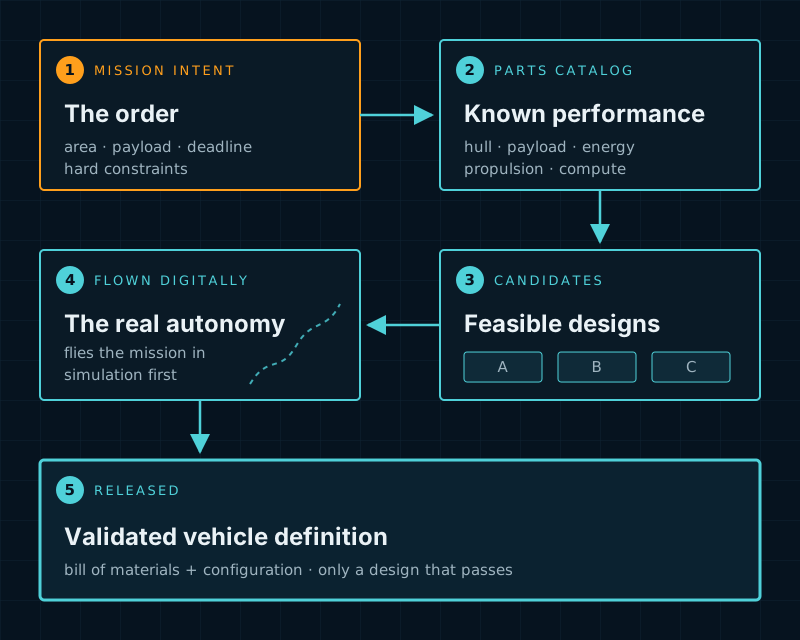
Mission intent becomes a validated vehicle definition.

COMPILR selects a vehicle configuration from a catalog of parts with known performance and validates it in the same simulation environment used by the autonomy stack. The result is a vehicle definition that has already flown the mission before it is built.

COMPILR concept: mission intent and a parts catalog produce candidate designs, each flown in simulation; only a design that passes is released as a validated vehicle definition

DIGITAL MANUFACTURING

Built digitally, then for real.

Every vehicle is built twice. First as a digital vehicle: assembled automatically from a library of components, weighed, and flown on its mission in simulation. Only a design that passes is released as a bill of materials, designed for units to build from kits of commercial parts, with harnesses that plug together and automated checkout. Losing a vehicle means building the next one from the same recipe.

Digital manufacturing is in development. Building the 3-D model automatically from the chosen configuration is the centerpiece of ORBITR's first demonstration.

Mission-definedAssembled automaticallyFlown before builtKit-built by the unitMeasured data improves every recipe
01ChooseThe mission picks parts with known performance
→
02ModelA 3-D model is assembled from a component library
→
03WeighMass, balance and inertia come from the model
→
04FlyThe digital vehicle flies its mission in simulation
→
05ReleaseOnly a design that passes becomes a bill of materials
→
06BuildUnits assemble from kits and check out every part

THE SIMULATED WORLD

Every mission flown before it is launched.

Every vehicle comes with a complete simulated world. The vehicle's own flight software runs unchanged against it, fed sensor data from a separate simulation computer exactly as real sensors would deliver it. Missions are rehearsed, stressed, and scored against ground truth before a vehicle ever launches.

BUILD

Build the World, Then Fly It

Any area of operations can be built from real charts and elevation data, then populated with the signals, vessels, and structures expected there. Missions are rehearsed in that exact world before deployment.

SIGNALS

A Living RF Environment

Radios, networks, sensors, and satellite links on the air as they would be in the real world, for the vehicle to find.

SENSORS

Acoustics, Sonar, and Video

Machinery noise, sonar returns from vessels and piers, and camera imagery, all from the vehicle's true position.

VEHICLE

Navigation and Faults

Navigation sensors, GPS loss, sensor failures, and communications outages injected on purpose to prove the vehicle copes.

TRADES

Trade Studies Across Environments

The same mission, or competing vehicle configurations, flown across many environments and conditions, every run scored against truth, so choices about payloads, tactics, and timelines rest on evidence before anything is built or deployed.

OPERATORS

Train as You Fight

Operators plan, monitor, and analyze simulated missions on the same stations they use for real ones.
ROLE-BASED OPERATOR STATIONS

One environment from tasking through analysis.

The operator suite is browser delivered and organized by role, each station speaking the same mission vocabulary as the vehicles. From the tasking order to the finished assessment, every step has its station.

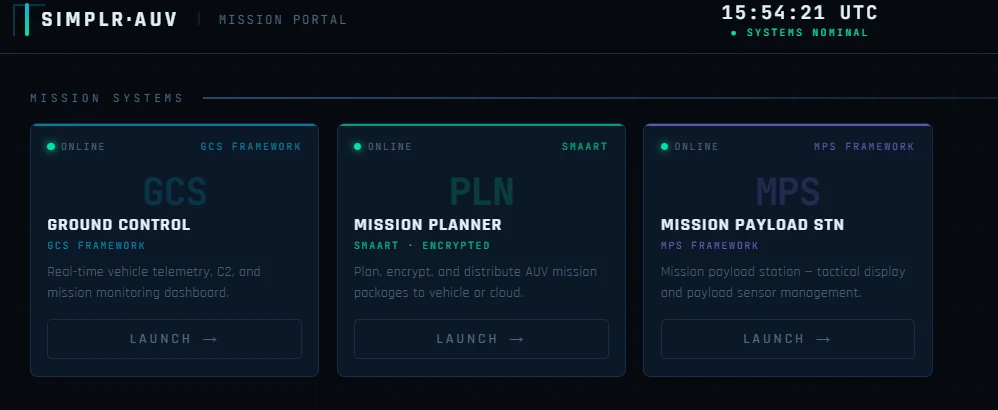
Mission portal showing mission applications
Mission PortalIntegrated mission environment
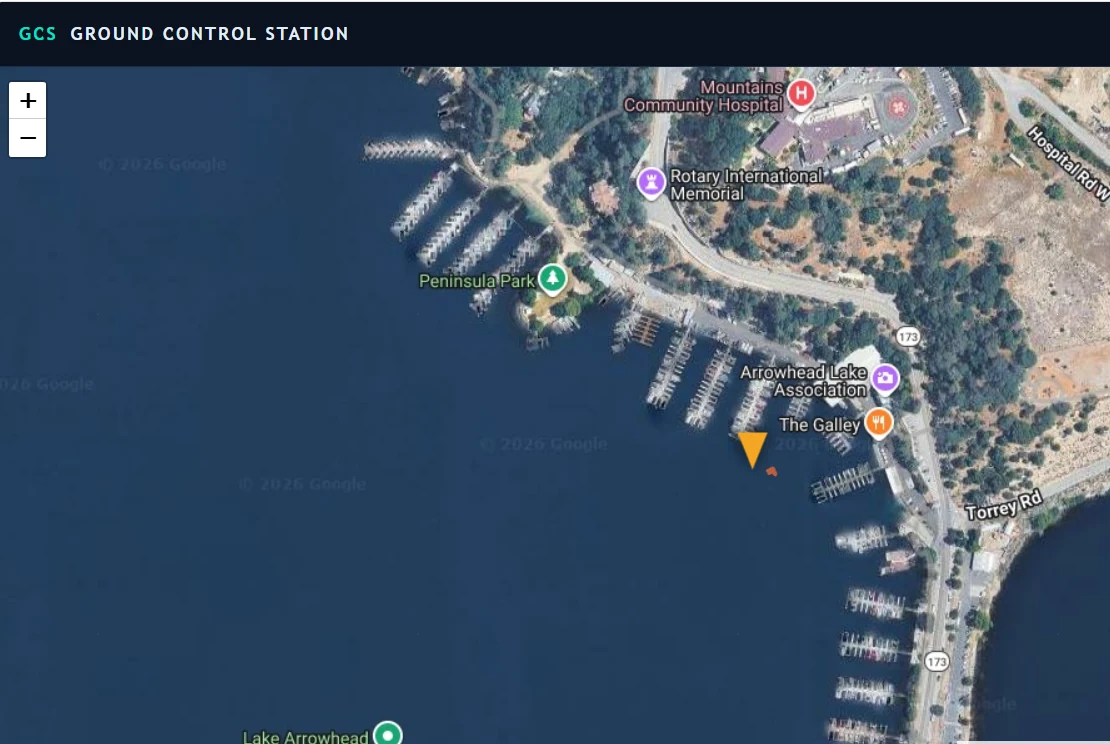
Ground Control Station monitoring a vehicle
Ground Control StationReal-time vehicle state and mission monitoring

OPEN SYSTEMS ENGINEERING

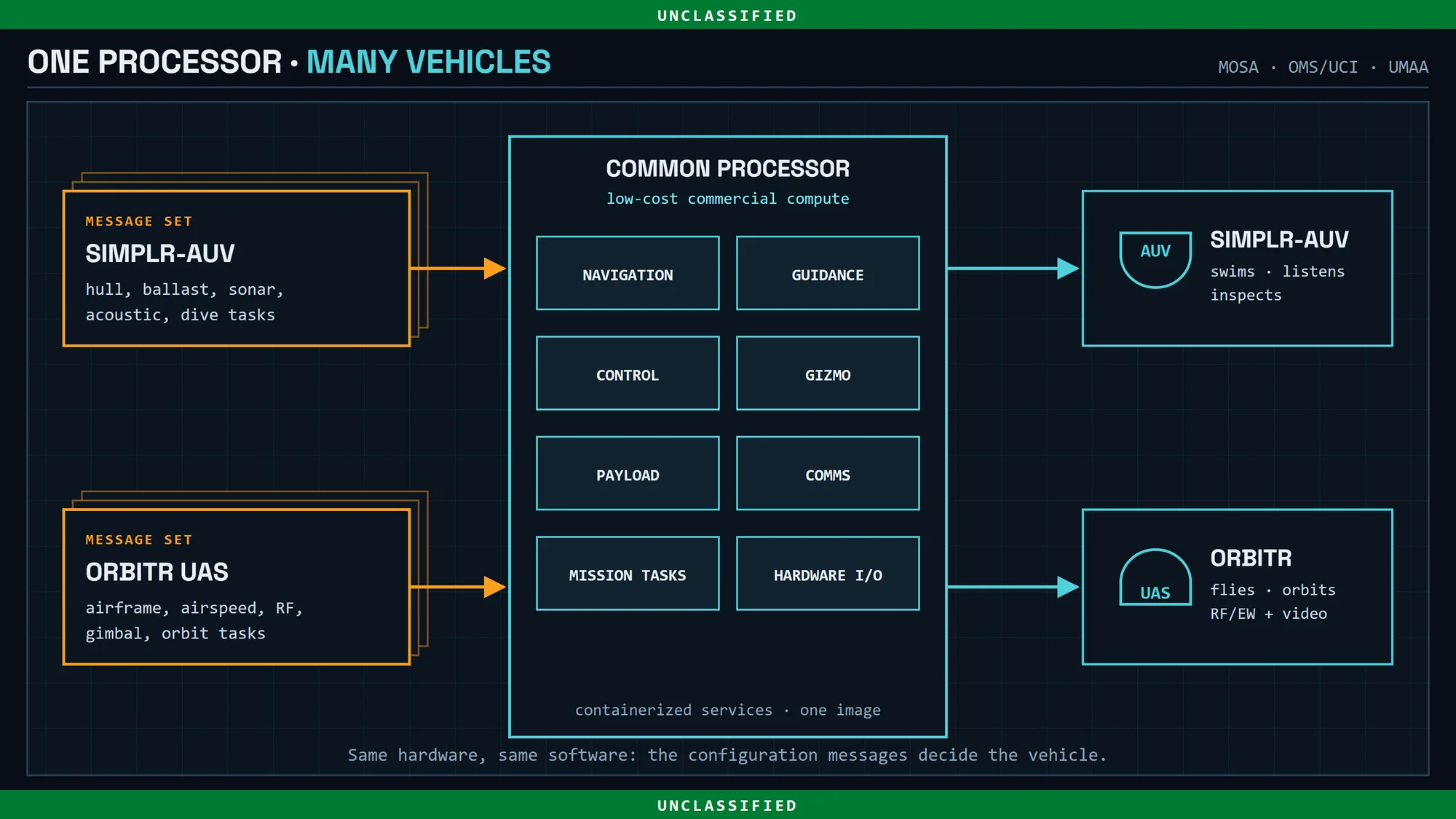
One processor, many vehicles.

The software runs as containerized services on low-cost commercial computers and talks only through defined messages. A set of configuration messages decides which vehicle the processor becomes, so a new vehicle type is a new message set, not a new software program. The architecture follows the Department of War's Modular Open Systems Approach.

One common processor running containerized services; an AUV message set makes it SIMPLR-AUV and an aircraft message set makes it ORBITR

ONE ECOSYSTEM · EVERY DOMAIN

Build the next mission capability.

For research, integration, teaming, and program inquiries, contact Cognitive Vehicles LLC.

wayne@simplr-auv.com

Wayne Folsom · Founder & CEO
wayne@simplr-auv.com · (949) 326-4252